Activity
-
 Rebecca Baizen posted an articleWhat If the Jewish Calendar Were a Journey, Not a List of Holidays? see more
As September arrives, planning for Rosh Hashanah moves quickly in many Jewish early childhood programs. Apples. Honey. Shofar. Round challah.
Soon we move toward Yom Kippur, Sukkot, and Simchat Torah, often looking for connections among their themes and symbols.
What if we also searched for the ideas that travel between the holidays?
From Holidays to Ideas
Consider the ideas children might encounter across the Jewish year.
Rosh Hashanah can raise questions about beginnings, change, cycles, and return. What does it mean to begin again?
Yom Kippur invites thinking about relationships, reflection, repair, and return. What happens when something goes wrong between people? Can relationships be repaired?
Sukkot offers possibilities around shelter, gathering, belonging, nature, and change. What makes a place feel like shelter? What makes a place feel like home?
Simchat Torah brings us to stories, cycles, endings, and beginnings. When we return to the same story, is the story different, or are we?
As the year continues, Hanukkah invites investigations of light, darkness, change, and time. Tu Bishvat opens questions about growth, interdependence, and what happens beyond our sight. Purim raises ideas about identity, perspective, and what is hidden or revealed. Passover creates possibilities for exploring journeys, memory, freedom, family, and what people carry with them.
These ideas do not belong to only one holiday.
Shelter at Sukkot may return as home and belonging during Passover. Beginnings at Rosh Hashanah may resurface during Simchat Torah. Light explored during Hanukkah may reappear months later through shadows beneath a tree at Tu Bishvat.
Planning for Continuity
This changes the question we ask when planning:
What is already alive in children's thinking, and where might it travel next?
Learning does not follow a direct route. Children linger, wander, pause, return, reconsider, and sometimes discover something entirely unexpected.
Perhaps our Jewish curriculum can make space for that movement.
The holiday passes. Materials change. Seasons move forward.
The question can remain.
And when children return to it, they bring new experiences, memories, and possibilities.
To continue exploring children's thinking, continuity, and revisiting, I invite you to read Chronicles of Children's Thinking on Substack.
Miriam Belogovsky Playful Transformation, LLC
-
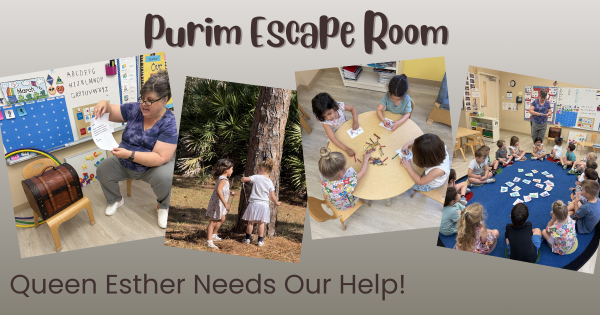
Melissa Vagn posted an articleA Purim Escape Room Experience in our 3-4 Year Old Classroom see more
My co-teacher and I are always looking for new and creative ways to spice up our lessons, but after a full day with 3-4 year-olds, we’re too tired to do more than read our emails. But when I opened the recent email from ECE-RJ about a Purim Escape Room, I was instantly excited. This activity was brilliant!
We have 16 children in our 3-year-old class at The Gan at Temple Sinai. We tweaked the activity to fit our space and time frame. Our director, Laura Freedman, was happy to see us jazzed up and assisted in securing additional space in our school/temple for us to use. We reached out to our room parents to help with the treasure box and treats!
-
We started with a letter from Queen Esther asking for our help
-
Each challenge was worked in pairs or as a whole class, cheering each other on
-
We used what we had already-puzzles, hula hoops, tunnels to crawl through
-
We used our classroom, the kitchen, science lab, teaching garden, and the chapel
-
As we finished each challenge, we clapped for ourselves and read the winning clue to figure out where to go next
-
We did all the challenges but 1 and it took us an hour
-
We finished with a “thank you” from Queen Esther and all the treats inside our treasure box
The children were thrilled…to say the least. They are still talking about it a week later! It was an amazing lesson that we plan to continue to use for the foreseeable future.
Melissa Vagn
Parparim teacher (3 & 4 year olds)
The Gan at Temple Sinai, Sarasota, FL
-
-
Andy Brenits posted an articleBring the joy of Purim to your early childhood classroom with engaging activities that celebrate the see more
Purim is a joyful Jewish holiday that celebrates the story of Queen Esther, who saved the Jewish people with the help of her uncle, Mordechai, from the evil Haman and the Persian King Ahashverosh. This festive holiday is a time to celebrate the survival of the Jewish community. Here are some fun and engaging ways to bring Purim into your early childhood classroom:
1. The Purim Story (For Kids) by PJ Library
Listening to the story of Esther is a great starting point to discuss the holiday with children. Consider asking them questions like:- How did Esther become the Queen?
- Why didn’t Haman like the Jewish people?
- What do you think made Esther brave enough to stand up to the King and Haman?
- How do you think Esther felt after convincing the King to take action against Haman?
2. Create Mishloach Manot (Purim Goodie Bags)
In the Book of Esther, we are encouraged to give gifts to others, especially those in need. A fun way to celebrate this tradition is by creating Mishloach Manot, or Purim goodie bags. These can be filled with treats like fruit, candy, Hamantaschen, and small toys or games to share with classmates and others in the community.3. Bake Hamantaschen Together
A classic Purim food is Hamantaschen, a triangular pastry filled with sweet fillings. Some fun variations include:Discuss why these cookies are a Purim tradition and enjoy baking them as a class!
4. Dress Up and Celebrate with a Purim Costume Party
In the Purim story, Queen Esther initially kept her Jewish identity a secret. Dressing up in costumes is a fun way to connect with the story and celebrate together. It also encourages a sense of unity and inclusion, as everyone can dress up and feel part of the celebration. Ask the children what costumes they'd like to wear, then host a Purim costume party. Don’t forget to check out this Spotify list of Purim Songs for Kids to get everyone in the spirit!5. Make Graggers and Retell the Story
Graggers (noisemakers) are traditionally used to drown out Haman’s name during the Purim story. Create some simple graggers with the children:Once they’re made, use the graggers to retell the story of Esther in a fun and interactive way!
6. Add Purim Puppets to the Drama Area
Children love to act out stories, so creating Purim puppets is a fantastic way to bring the story of Esther to life. Work with the children to make puppets, which they can then use in the classroom’s theater or drama area. This provides a creative outlet for them to express their understanding of the story in their own way.These activities are great ways to celebrate Purim and introduce young children to the holiday’s traditions, characters, and messages.
Tricia Ginis, Executive Director, ECE-RJ